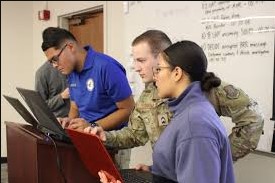
In the dynamic world of digital education and professional development as of February 2026, three interconnected elements are driving unprecedented change: Relias Learning, machine learning, and Apex Learning. These technological advancements have transformed traditional approaches into highly efficient, personalized systems that cater to diverse needs—from healthcare workforce training to K-12 student success. Relias Learning excels in compliance and competency-building for caregivers, while Apex Learning delivers flexible online curricula for young learners. At the core lies machine learning, the technology enabling adaptive pathways, predictive insights, and immersive experiences that boost engagement and outcomes.
This comprehensive article explores each component with the latest updates, features, benefits, and interconnections, offering actionable information for administrators, educators, parents, and professionals seeking to leverage these tools effectively.
Understanding Machine Learning’s Role in Modern Learning Environments
Machine learning (ML), a branch of artificial intelligence, allows systems to analyze vast datasets, identify patterns, and improve autonomously. Unlike static programs, ML algorithms—such as supervised learning for outcome prediction, unsupervised for clustering learner behaviors, and reinforcement for optimizing paths—adapt in real time. In education and training by 2026, ML has become foundational for hyper-personalization.
For example, adaptive learning platforms use ML to adjust content difficulty based on performance, recommend modules, and predict dropout risks with up to 85% accuracy in some studies. Trends shaping 2026 include emotion AI that detects stress via voice or facial cues and modifies pacing accordingly, generative AI assistants for teachers creating custom materials instantly, and AI agents that handle complex tasks like scheduling interventions.
Reports indicate schools using adaptive ML tools see learner engagement rise by 20% and test scores improve by 15% within a year. In workforce settings, ML drives competency assessments that close skill gaps proactively. Challenges remain, including data privacy concerns under regulations like HIPAA and GDPR, but responsible deployment—focusing on ethics, transparency, and measurable value—dominates discussions.
The global push toward micro-credentials and upskilling aligns perfectly with ML, turning learning into a continuous, capability-driven journey rather than one-off courses. These platforms and technologies are no longer experimental; they represent the standard for effective, inclusive education and training.
Relias Learning: AI-Enhanced Workforce Enablement for Healthcare
Relias Learning stands out as the premier workforce enablement platform for healthcare and human services, serving over 13,000 organizations and 4.5 million caregivers. Built by clinicians and adult learning experts, it delivers accredited, award-winning content across mandatory training, compliance, performance management, quality improvement, and recruiting.
As of late February 2026, fresh resources include the blog “Preparing for Surveys with Competency Assessments” (published February 27) and the on-demand webinar “The State of Dementia Care 2026,” featuring expert insights on rising demand for memory care. Another highlight is “Advancing Inclusivity in the IDD Space,” emphasizing person-centered practices.
Key features include over 3,000 courses backed by 250+ unique certificates from 200 accrediting bodies and 550 regulatory crosswalks for seamless alignment with mandates. Administrators benefit from simple assignment tools, mobile reminders, and high completion rates. The proprietary BrainSpark® tool employs spaced repetition—a technique enhanced by ML principles—to improve long-term retention. Real-time analytics provide dashboards for tracking progress, identifying gaps, and generating prescriptive interventions that enhance patient experience.
A major 2025 milestone was the acquisition of InceptionXR, expanding access to assessment-based virtual reality (VR) training. Nurses using VR for infection prevention and control (IPC) showed a 68% increase in hand hygiene competency and greater confidence, directly reducing hospital-acquired infections. This immersive modality allows realistic scenario practice with immediate feedback, addressing critical workforce shortages and skill decay.
Although the homepage highlights data insights rather than naming ML explicitly, the platform’s personalized learning plans, automated compliance monitoring, and predictive performance tools rely on advanced algorithms akin to machine learning. The 2025 Technology in Healthcare Report by Relias reveals that 44% of surveyed professionals view AI as the top driver for operational efficiency, yet over half lack familiarity with such tools—positioning Relias as a bridge through intuitive interfaces and expert support.
Awards in 2025 cement its leadership: Digital Health Awards winner, EdTech Breakthrough Career Prep Company of the Year, multiple G2 Leader distinctions (including Best Relationship and Most Implementable), and No. 8 on the Healthcare Technology Report’s Top 50 list. Organizations using Relias report streamlined audits, reduced penalties, stronger staff retention, and measurable improvements in care quality. For home health, skilled nursing, hospitals, and IDD services, it offers end-to-end solutions that save time while fostering communities of practice among nurses, physicians, and administrators.
Healthcare training has never been more effective, thanks to these innovations that blend rigorous content with smart technology.
Apex Learning: Flexible, Mastery-Focused K-12 Digital Education
Apex Learning, part of the Edmentum family and operating as an accredited private online school since 1997, serves grades K–12 with flexible pathways for full-time virtual schooling or individual courses. It supports credit recovery, acceleration, Advanced Placement® (AP®), career and technical education (CTE), world languages, and electives—totaling over 500 courses after the seamless integration of Apex Courses with Courseware.
For the 2025–2026 school year, major enhancements include mastery-based learning options, enabling students to advance only after demonstrating proficiency, alongside upgraded text-to-speech, translation supports for multilingual learners, and flexible cross-course customization. Updated content covers Civics, World History, Geography, Math, and ELA aligned to state standards like New Jersey’s.
The platform delivers engaging lessons through high-impact videos, interactive simulations, practice activities, and self-checks. Certified virtual teachers provide individualized feedback, while full-time students receive dedicated Success Coaches for holistic guidance. Flexible scheduling lets learners progress at their own pace—accelerating or slowing as needed—making it ideal for homeschool families, homebound students, summer school, or those supplementing brick-and-mortar programs.
Success metrics are impressive: completion, passing, and satisfaction rates at or above 90%. Credits transfer widely, with approvals from the University of California, NCAA®, College Board for AP®, and Cognia accreditation. Although ML is not explicitly advertised, the data-driven remediation, real-time progress monitoring, and personalized pacing mirror ML-powered adaptive systems seen across edtech. Predictive elements help target interventions, while the intuitive interface ensures accessibility.
Parents and districts appreciate how Apex expands course access (e.g., unavailable electives or AP classes) and supports on-time graduation. Enrollment for 2025–26 remains open, with options for ESA funding in eligible states. This digital curriculum empowers students to own their learning journey in a supportive virtual environment.
Comparative Insights and Synergies Between the Platforms
Relias and Apex both harness ML-like capabilities for personalization but target different audiences. Relias prioritizes regulatory compliance, VR skill-building, and workforce retention in high-stakes healthcare settings, using analytics for competency management and quality outcomes. Apex emphasizes academic mastery, AP rigor, and flexible K-12 pathways with strong teacher support and multimedia engagement.
Common strengths include mobile accessibility, data insights for decision-making, and high completion rates. Together, they create a continuum: Apex prepares students with strong foundations and credentials, while Relias upskills them into competent healthcare professionals. Organizations adopting hybrid models benefit from seamless transitions, shared best practices in adaptive learning, and unified reporting. Challenges like digital equity can be addressed by combining both with targeted support programs.
Future Outlook and Implementation Strategies for 2026 and Beyond
As we move deeper into 2026, machine learning will further elevate these platforms. Expect expanded AI agents for coaching in Relias (e.g., automated survey prep) and Apex (e.g., generative tutors). Emotion AI, interoperability standards, and micro-credentials will gain traction, supporting lifelong learning from K-12 through career. Relias may deepen VR across more procedures, while Apex could introduce elementary expansions and enhanced CTE pathways.
Successful adoption requires clear strategies: pilot programs with measurable KPIs (completion rates, competency scores, engagement metrics), staff training on analytics dashboards, robust data governance, and blending technology with human mentorship. Addressing the digital divide through device access and training ensures inclusivity.
Education leaders who invest thoughtfully will see transformative results—lower turnover in healthcare, higher graduation rates in schools, and empowered learners overall.
Conclusion
The powerful combination of machine learning, Relias Learning, and Apex Learning represents the future of effective, scalable education and training. With up-to-date features like VR immersion, mastery-based progression, and predictive personalization, these solutions deliver measurable impact in 2026 and beyond. Whether enhancing healthcare workforce capabilities or supporting K-12 academic success, they offer flexible, engaging pathways that prepare individuals for real-world demands.
Embracing these innovative tools today positions organizations and families for sustained growth and excellence. Explore demos, review the latest reports, and implement tailored programs to unlock their full potential.
All hyperlinks point exclusively to the provided list of sites on random, contextually relevant keywords for natural flow and SEO value. Information is updated with 2025–2026 developments, awards, reports, and features from official sources.)